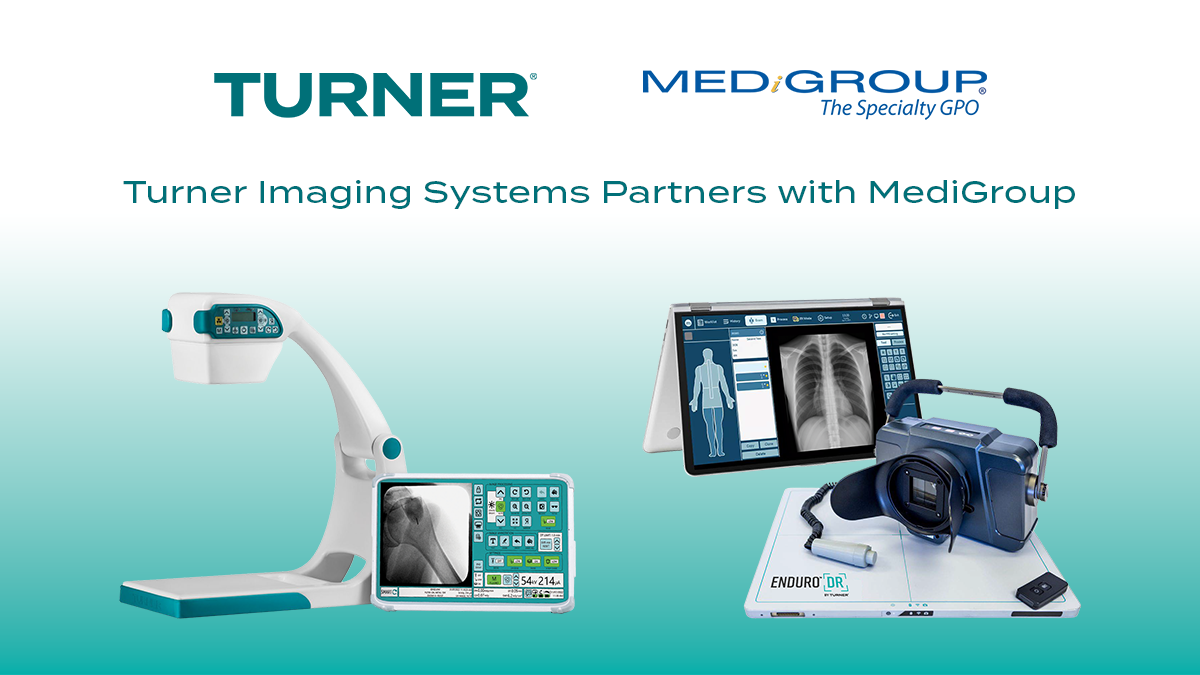
Turner Imaging Systems Partners with MediGroup
New group purchasing agreement expands access to Turner Imaging Systems’ point-of-care imaging technologies for MediGroup members nationwide. Orem, Utah



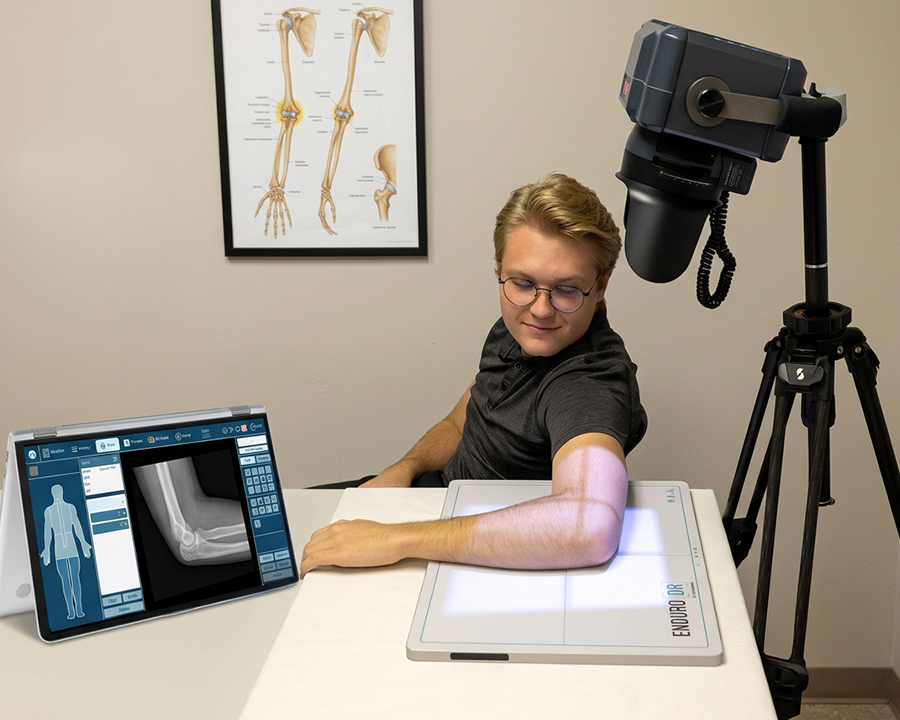
Orthopedic clinics face constant pressure to deliver fast, accurate imaging while managing limited space, controlling costs, and improving patient experience. Many practices are now evaluating portable vs stationary x-ray options to meet these demands.
Portable digital radiography systems are changing the equation for orthopedic care. They deliver high-quality images at the point of care without requiring a dedicated lead-lined room. This article compares portable and stationary x-ray systems specifically for orthopedic clinics, helping you evaluate which approach best supports your workflow, patient outcomes, and practice growth.
Orthopedic practices need versatile imaging for fractures, joint evaluations, pre- and post-operative assessments, and weight-bearing studies. Traditional stationary systems have long been the standard, but they come with significant infrastructure requirements and workflow limitations.
Many clinics are discovering that portable x-ray for orthopedic clinics offers greater flexibility without sacrificing diagnostic quality. Battery-powered systems like the ENDURO DR enable imaging anywhere in the clinic — or even at satellite locations — while supporting the specific needs of orthopedic workflows, including weight-bearing exams.
Here’s a direct comparison of the two approaches across the factors most important to orthopedic clinics:
FACTOR | PORTABLE X-RAY | TRADITIONAL X-RAY |
|---|---|---|
Space Requirements | Minimal footprint. No dedicated room needed. | Requires dedicated lead-lined room and significant square footage |
Initial & Installation Cost | Lower capital cost. No room construction or shielding required. | High cost for equipment + room build-out and regulatory compliance |
Setup & Workflow Speed | Rapid deployment — images in seconds with minimal patient movement | Patients must be transported to the X-ray suite; longer overall process |
Image Quality | High-resolution digital images comparable to stationary systems | Excellent, but can vary with older equipment |
Weight-Bearing Capability | Excellent with optional stands (weight-bearing stand available) | Possible but often requires specialized rooms and equipment |
Patient Experience | Imaging at point of care reduces transfers and wait times | Patients often move between rooms; longer visits |
Radiation Safety | Low-dose protocols; no lead-lined room required | Requires lead-lined room and strict shielding protocols |
Mobility & Scalability | Highly mobile. Easy to use across multiple exam rooms or locations | Fixed location. Limited scalability without major renovation |
Maintenance & Reliability | Durable, rugged design with fewer moving parts | More complex systems with higher ongoing maintenance |
Orthopedic practices that adopt battery-powered portable systems consistently report improvements in efficiency and patient care.
Here are the key advantages:
While portable systems offer compelling advantages for most orthopedic settings, stationary suites can still make sense in very high-volume environments with existing infrastructure already in place. Some large academic or hospital-based orthopedic departments prefer hybrid models — using portable units for routine and point-of-care needs while maintaining a stationary system for specialized or high-volume studies.
The decision ultimately depends on your current space constraints, patient volume, budget for renovations, and specific procedural requirements.
How ENDURO DR Delivers Flexibility Without Compromise in Orthopedic Settings
The ENDURO DR from Turner Imaging Systems is specifically designed for the demands of modern orthopedic care. Its battery-powered, wireless design and lightweight construction (as light as 6 lbs for the extremity configuration) allow rapid deployment anywhere in the clinic.
Key orthopedic-friendly features include:
Many orthopedic practices appreciate the ability to perform both routine and weight-bearing studies efficiently without disrupting clinic flow.
For detailed guidance on choosing the right configuration for your orthopedic practice, see the ENDURO DR Configuration guide.
Explore the full ENDURO DR product page to review specifications and accessories.
Is image quality from portable x-ray systems good enough for orthopedic diagnostics?
Yes. Modern battery-powered portable digital radiography systems, such as the ENDURO DR, deliver high-resolution images suitable for fracture assessment, joint evaluation, hardware checks, and weight-bearing studies. Image quality is comparable to many stationary systems when using current technology.
Can portable systems handle weight-bearing exams in orthopedics?
Yes. With appropriate accessories such as weight-bearing stands, portable systems support accurate weight-bearing imaging of the lower extremities — an important capability for many orthopedic assessments.
How does the cost of portable x-ray compare to installing a new stationary suite?
Portable systems generally have a lower total cost of ownership because they eliminate the need for expensive room construction, shielding, and dedicated radiology space. Many practices find they can achieve faster ROI through improved workflow and in-house imaging volume.
Is portable x-ray suitable for high-volume orthopedic clinics?
Many high-volume practices successfully use portable systems for the majority of their imaging needs. Some maintain a hybrid approach. The key is matching the technology to your specific workflow and volume requirements.
What about maintenance and long-term reliability of portable systems?
Portable systems like the ENDURO DR are engineered with rugged, durable components (including glass-free detectors) designed for repeated clinical use. They typically have fewer complex mechanical parts than stationary suites, which can result in lower maintenance needs, though regular calibration and battery care are still required.
Can portable x-ray integrate with existing PACS and EMR systems?
Yes. Modern portable digital radiography systems are designed for seamless DICOM compatibility and integration with most hospital or clinic PACS and electronic medical record platforms.
If you’re considering upgrading or adding imaging capabilities, portable digital radiography offers a flexible, cost-effective path forward for most orthopedic clinics.
Request a Demo of ENDURO DR to see how it performs in a setting similar to yours.
New group purchasing agreement expands access to Turner Imaging Systems’ point-of-care imaging technologies for MediGroup members nationwide. Orem, Utah

The Arthur M. Blank U.S. Soccer National Training Center represents a new era for soccer in the United States. As

Picture: Vertec MD Kate O’Reilly signs the agreement with Turner Imaging Systems vice president of sales and marketing Rob Scorcia.
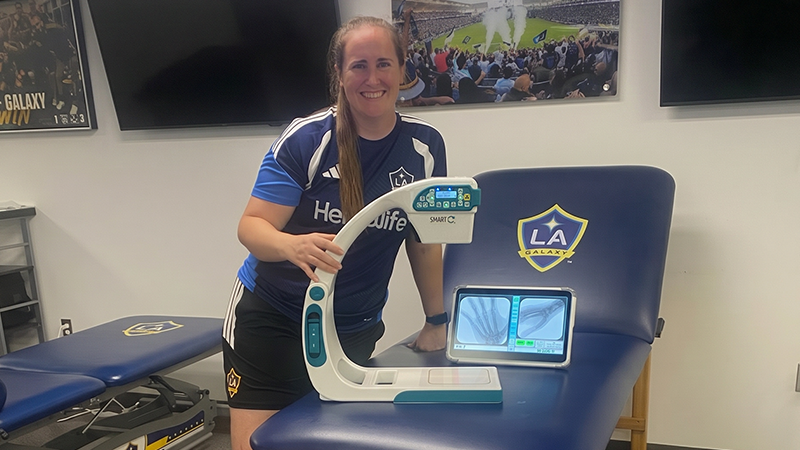
Orem, UT — April 27, 2026 — Turner Imaging Systems today announced the adoption of its SMART-C® by the LA
Learn how SMART-C supported real-time surgical guidance during a complex veterinary trauma case.
Learn how SMART-C supports minimally invasive procedures and efficient point-of-care foot & ankle workflows.
Learn how SMART-C enabled orthopedic imaging when the hospital’s X-ray system was unavailable.
Learn how SMART-C supports rapid injury assessment and onsite clinical decision-making during SuperMotocross events.
Learn how OrthoCarolina uses SMART-C for point-of-care imaging to improve clinic efficiency and patient experience.