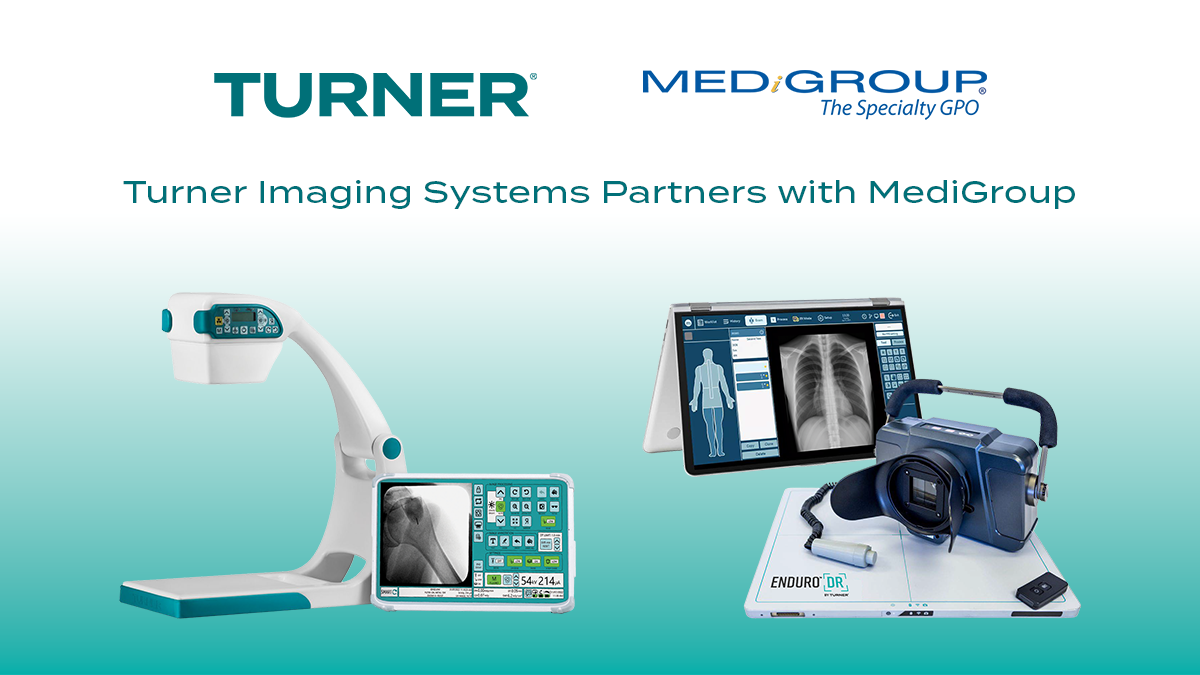
Turner Imaging Systems Partners with MediGroup
New group purchasing agreement expands access to Turner Imaging Systems’ point-of-care imaging technologies for MediGroup members nationwide. Orem, Utah



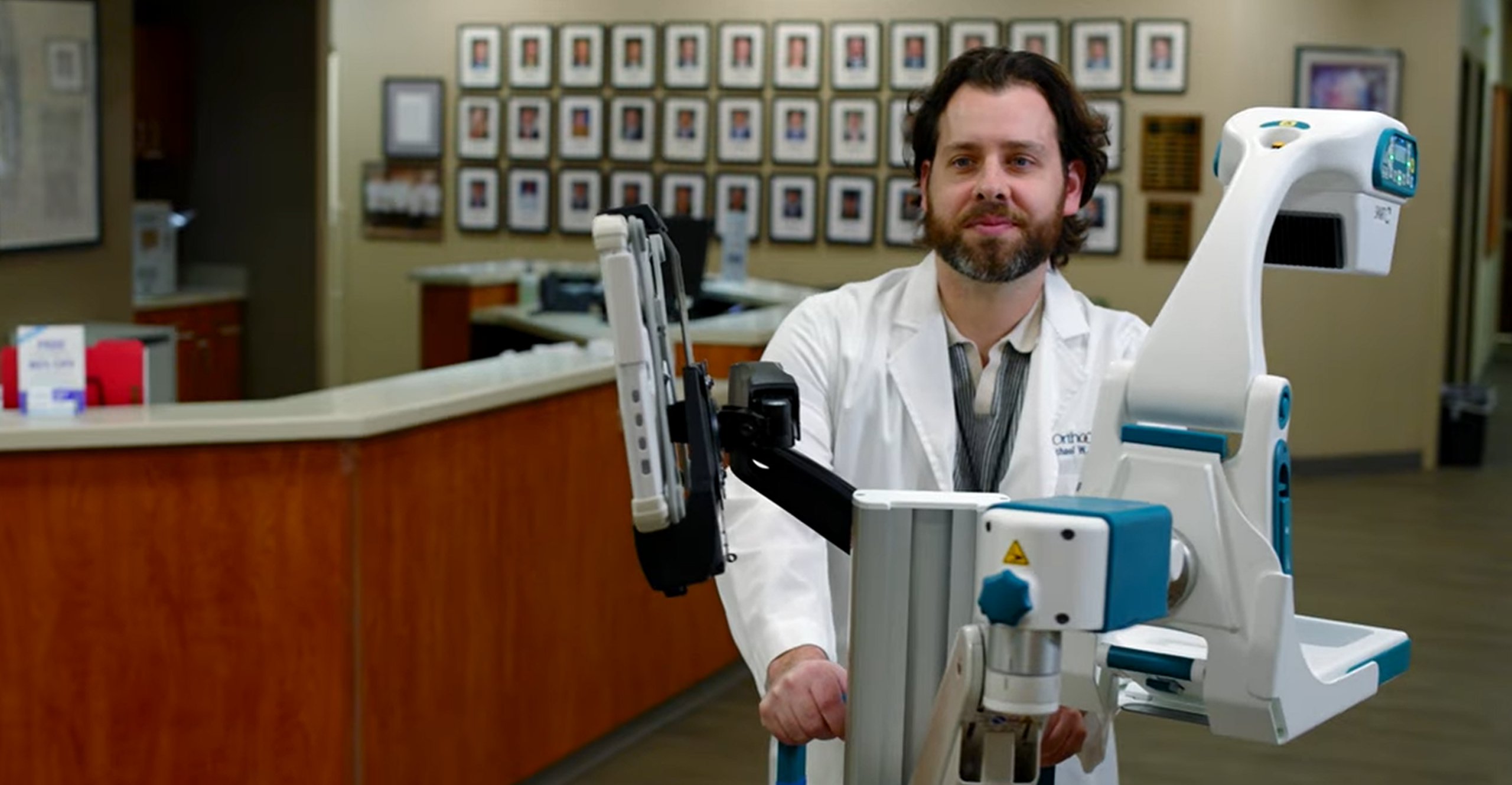
In today’s clinical environment, speed, efficiency, and patient experience matter more than ever.
For many practices — especially in orthopedics, podiatry, and sports medicine — traditional imaging workflows can create unnecessary friction. Scheduling delays, patient transport, and disconnected workflows all slow down care.
A recent article in Podiatry Management highlights how in-office fluoroscopy is helping practices eliminate these gaps—bringing imaging closer to the point of care and improving both efficiency and patient experience.
That’s why more providers are moving toward in-office fluoroscopy.
Fluoroscopy is a real-time imaging technique that allows clinicians to visualize movement inside the body using X-rays.
Unlike static imaging, fluoroscopy enables providers to:
Bringing that capability directly into the clinic changes how imaging fits into everyday care.
One of the biggest advantages is simple: no more sending patients elsewhere for imaging. Instead of coordinating with outside imaging centers, providers can:
This eliminates a major bottleneck in the patient journey and improves overall clinic efficiency
See how portable fluoroscopy fits into real clinical workflows.
With in-office fluoroscopy, you’re not guessing — you’re seeing. Real-time imaging allows clinicians to:
This is especially valuable for injections, minor procedures, and dynamic evaluations where precision matters.
Modern fluoroscopy systems are built with dose-reduction technology, helping keep exposure as low as reasonably achievable (ALARA). This benefits:
You get the imaging you need — without unnecessary exposure.
In-office imaging can reduce costs on multiple levels.
For practices:
For patients:
Fluoroscopy can also be a cost-effective alternative to more advanced imaging like CT or MRI in appropriate cases.
This is the underrated one — and it matters. When patients can see what’s happening in real time, it:
Instead of abstract explanations, you’re using imaging as a tool for communication, not just diagnosis.
Adding fluoroscopy isn’t just about diagnostics. It can also:
For many practices, it becomes both a clinical and operational advantage, helping imaging play a more central role in patient care.
Every practice is different, but the trend is clear:
Clinics are moving toward more control, more efficiency, and more point-of-care capability.
In-office fluoroscopy supports all three.
As technology continues to evolve, it’s becoming easier than ever to integrate imaging directly into everyday workflows—without the limitations of traditional systems.
As more clinics move toward in-office imaging, portability has become a key factor. Traditional systems can be difficult to move, require dedicated space, or introduce workflow limitations that reduce the benefits of having imaging on-site.
Newer portable fluoroscopy systems are designed differently.
Lightweight, cordless designs allow imaging to move with the clinician—from room to room—without disrupting workflow or requiring a fixed imaging setup.
This makes it easier to:
Systems like SMART-C® are built around this model—combining portability, cordless operation, and real-time imaging to support true point-of-care use.
For practices looking to bring imaging in-house, portability isn’t just a feature — it’s what makes in-office fluoroscopy truly practical.
In-office fluoroscopy isn’t just about adding equipment. It’s about removing friction from imaging and care delivery — for both providers and patients.
And in a healthcare environment where efficiency and experience matter, that’s a meaningful shift.
Source
This article was inspired by insights published in Podiatry Management, including “Implementing In-Office Fluoroscopy” by Luke Hunter, DPM
New group purchasing agreement expands access to Turner Imaging Systems’ point-of-care imaging technologies for MediGroup members nationwide. Orem, Utah

The Arthur M. Blank U.S. Soccer National Training Center represents a new era for soccer in the United States. As
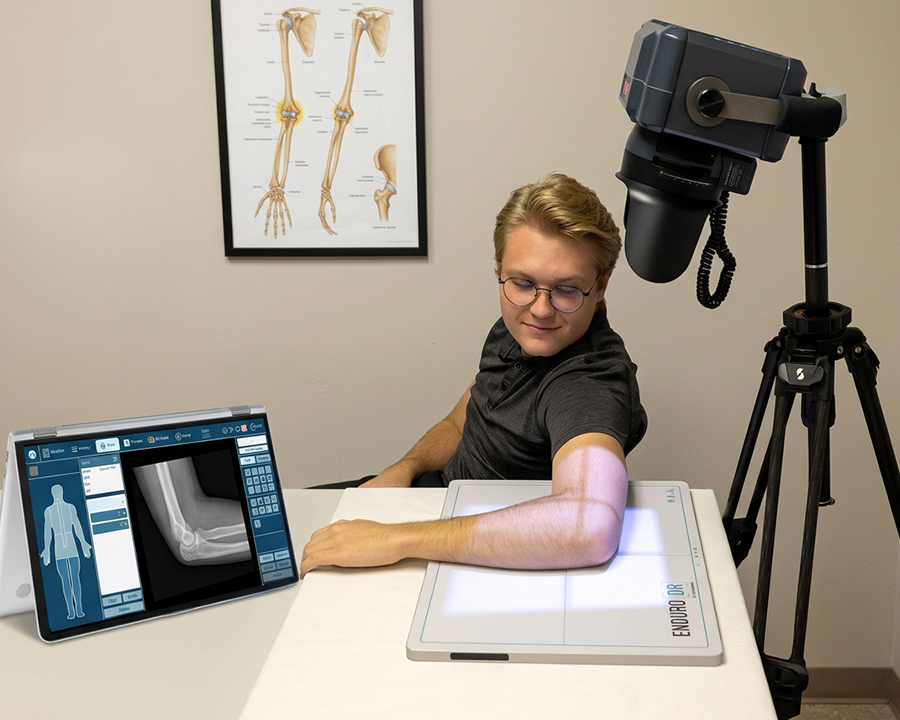
Orthopedic clinics face constant pressure to deliver fast, accurate imaging while managing limited space, controlling costs, and improving patient experience.

Picture: Vertec MD Kate O’Reilly signs the agreement with Turner Imaging Systems vice president of sales and marketing Rob Scorcia.
Learn how SMART-C supported real-time surgical guidance during a complex veterinary trauma case.
Learn how SMART-C supports minimally invasive procedures and efficient point-of-care foot & ankle workflows.
Learn how SMART-C enabled orthopedic imaging when the hospital’s X-ray system was unavailable.
Learn how SMART-C supports rapid injury assessment and onsite clinical decision-making during SuperMotocross events.
Learn how OrthoCarolina uses SMART-C for point-of-care imaging to improve clinic efficiency and patient experience.